What We Do

Services

Every deck job we take on, from a full build to a quick repair.

HomeServices

Everything we take on

Every job below is one we do ourselves across Milwaukee.

Deck Installation

We frame new decks on concrete footings poured below Wisconsin's frost line, usually 42 inches down, so the structure doesn't heave when the ground freezes and thaws. Joists run 16 inches on center for standard decking, closer for composite or if you want tile. We handle the layout, the ledger flashing, and the inspection.

Deck Repair

Most repair calls start with a soft board, a rotted ledger, or a railing that moves when you grab it. We pull the bad section apart to see how far the rot or the rust has traveled before we patch anything. Sometimes a repair is really a sign the whole substructure needs replacing, and we'll tell you which one it is.

Deck Staining & Sealing

Bare wood grays and starts to splinter within a year or two in Wisconsin sun and rain. We pressure-wash first, let the boards dry for a couple of days, then apply a penetrating stain or sealer rated for our freeze-thaw cycle. Solid stain hides more, semi-transparent shows the grain, and we'll tell you which one suits the wood you've got.

Custom Deck Design

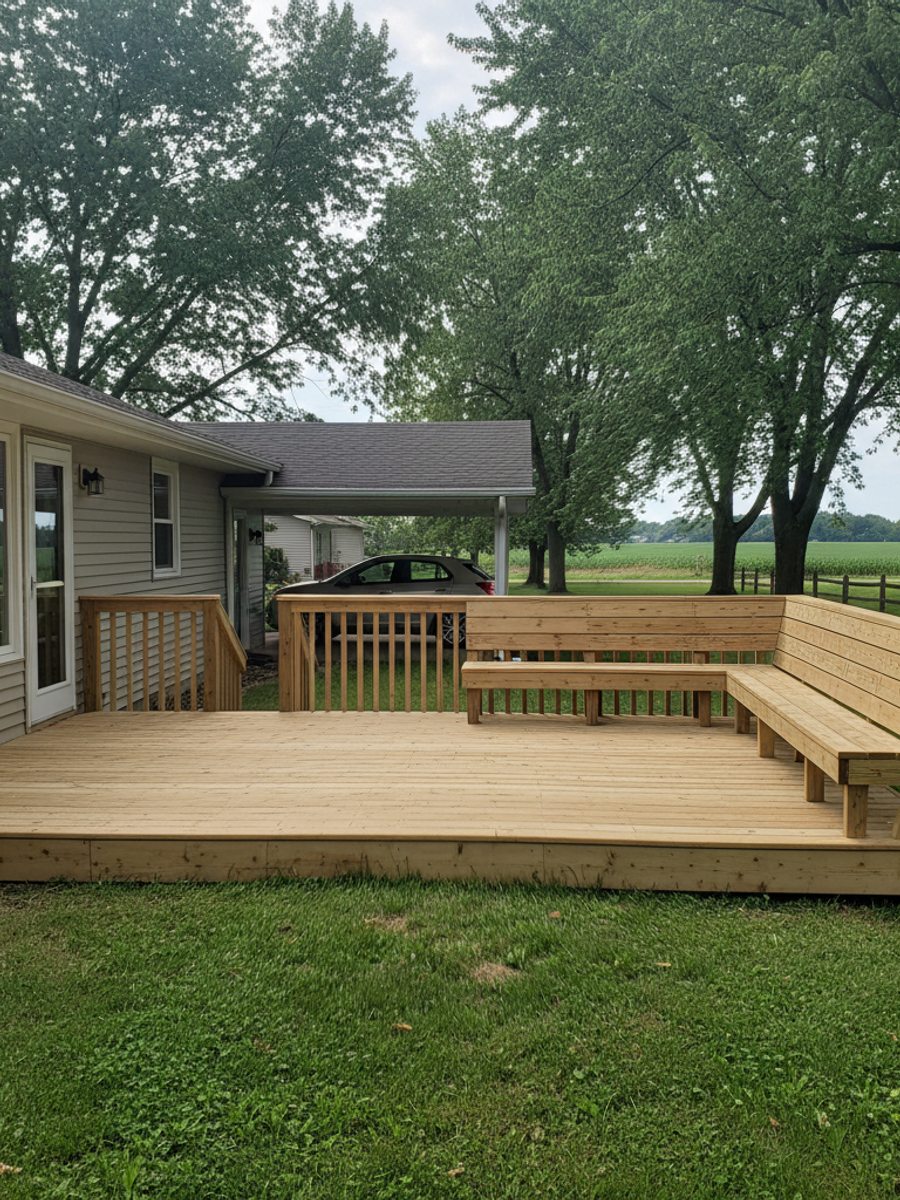
Some decks just need to be a rectangle with stairs. Others need a lower patio-level deck, built-in seating, a pergola over part of it, or a layout that works around a big tree or a slope in the yard. We sketch it out and price the options before anyone commits to a design.

Composite Decking Installation

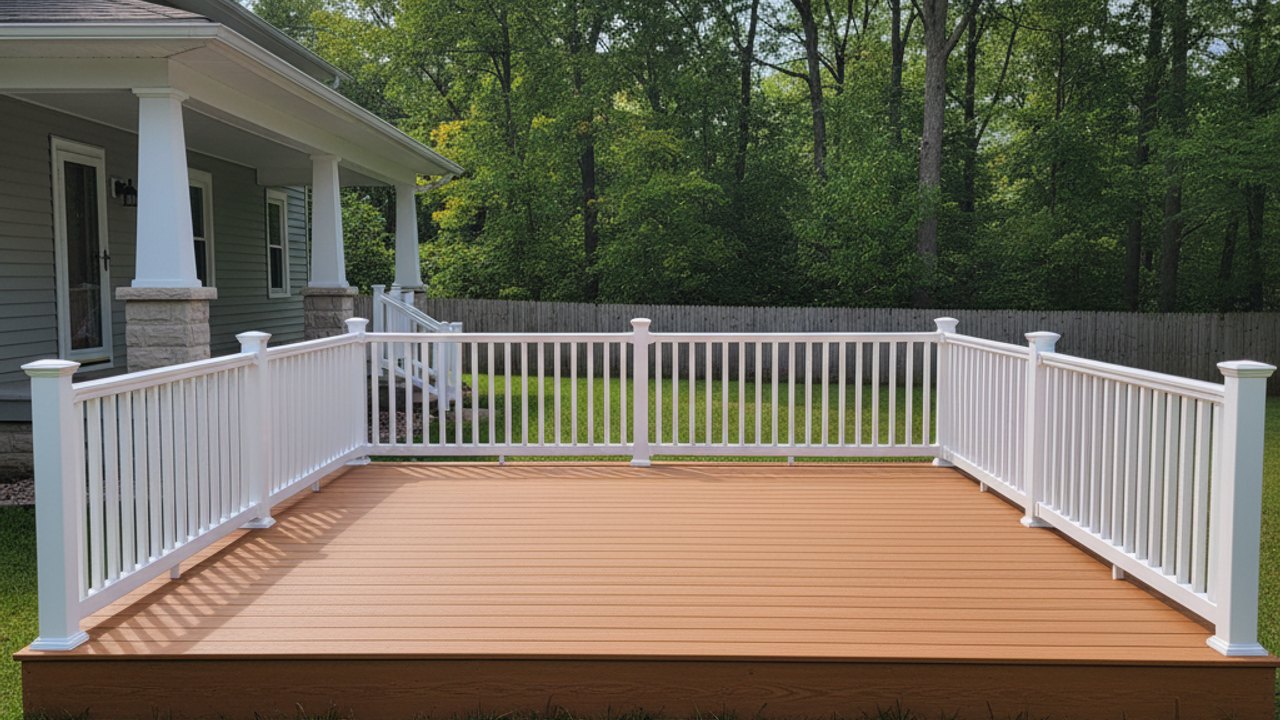
Composite boards like Trex or TimberTech don't rot and don't need staining, but they still need the framing done right underneath, including proper spacing for expansion. We use hidden fastener clips so there's no screw heads showing on the walking surface. It costs more than pressure-treated pine, but it's close to maintenance-free for the next 20 years.

Deck Railing Installation & Repair

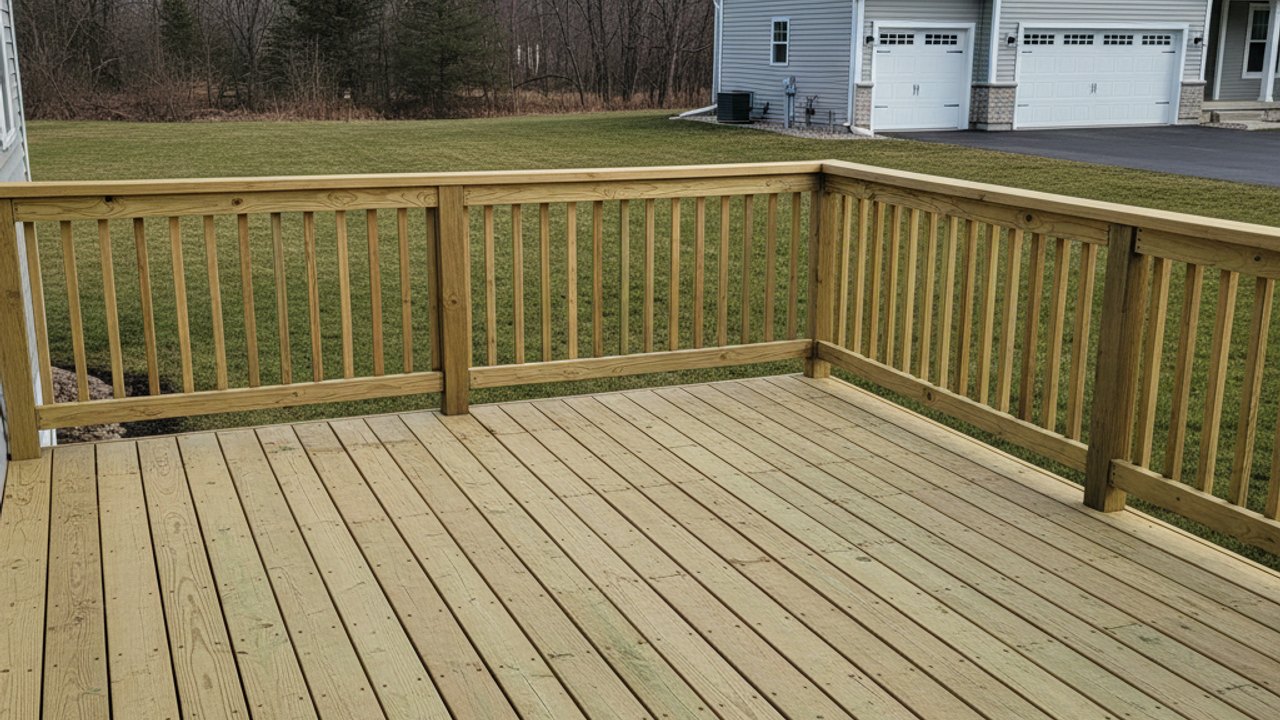
Building code calls for balusters spaced so a 4-inch sphere can't pass through, and a lot of older decks in this area don't meet that anymore. We bolt posts through the rim joist instead of just lag-screwing into the face, which is the difference between a railing that holds and one that leans after a few years. Cable, aluminum, and wood railing all get installed and repaired.

Deck Resurfacing

If the frame underneath is still solid but the boards are cupped, cracked, or full of splinters, we strip the old decking and lay new boards on the existing structure. It's cheaper than a full rebuild and takes a fraction of the time. We check every joist for rot before we screw anything new down.

Screened-In Porch Construction

A lot of homeowners want the deck covered, screened, or both, especially once mosquito season hits. We frame the roof structure, run the screen track, and tie the whole thing into the existing deck or build it new. It turns three-season into pretty close to year-round use.

Deck Demolition & Removal

Old decks come down board by board when we can salvage the framing, or all at once with a dumpster on site when it's all going. We check the footings while it's torn open, since that's the one part worth reusing if it's still sound. Nails, screws, and debris get swept before we leave.

Pergolas & Shade Structures

Pergolas, privacy walls, and simple shade structures get built onto or next to an existing deck without messing with the original structure's load rating. They're a smaller job than a full deck build, and a good add-on if the deck itself is fine but the sun isn't.

How It Works

Four steps, and no surprises in any of them.

01

We come and look

You tell us what you want doing, we look at what is actually there, and we ask the awkward questions early.

02

You get a price

In writing, itemised, free. If something might add cost later we flag it now rather than at the end.

03

We do the work

Same crew throughout. We cover your floors, keep the dust down and tidy up before we leave each day.

04

We walk it with you

You point out anything you are not happy with and we fix it before the invoice, not after.

Where We Work

All of this, across Milwaukee, WI

Deck installation and repair across the greater Milwaukee area.

Milwaukee, WI
Racine, WI
Waukesha, WI
West Allis, WI
Wauwatosa, WI
Brookfield, WI
New Berlin, WI
Menomonee Falls, WI
Franklin, WI
Oak Creek, WI
Greenfield, WI
Cudahy, WI
Common Questions

Things worth asking

What comes up once a deck project actually gets underway.

Do I need a permit to build a deck in Milwaukee?
Most municipalities around Milwaukee require a permit for any deck attached to the house or more than 30 inches above grade, with inspections required at the footing and framing stages. Permit filing and inspection scheduling are typically handled as part of the deck installation process.
How long does it take to build a new deck?
A standard deck, roughly 300 to 400 square feet, usually takes one to two weeks from footings to final board, weather and inspection scheduling permitting. Larger decks, multi-level designs, or ones with a screened porch attached take longer.
Can a deck be built to fit a specific budget?
Deck size, decking material, and railing style all get adjusted to hit a target budget, and pressure-treated pine framing with composite decking on top is one common way to balance cost against maintenance. A written quote breaks out material and labor so it's clear where the money is going.
Is deck construction work guaranteed?
Workmanship on deck construction is typically guaranteed against defects for a set period after completion, with details spelled out in the written quote before work starts. Manufacturer warranties on materials like composite decking or hardware are separate and passed along as-is.
Who handles questions during the deck project day to day?
One point of contact typically handles scheduling, questions, and any changes during a deck project rather than passing the homeowner between an office and a crew. The crew setting footings and framing the deck is usually the same crew finishing the railing and stairs.
What decking materials are commonly used?
Pressure-treated pine, cedar, and composite brands like Trex and TimberTech are the most common decking materials used, each with its own maintenance schedule and price point. Framing lumber is pressure-treated regardless of what decking material goes on top, since that's the part carrying the load.
Can the yard and house still be used while a deck is being built?
The yard around the deck site typically stays accessible during most of the build, though the immediate work area gets fenced or blocked off for safety while footings are open or framing is underway. Access to the house through other doors isn't usually affected.
Is there anything to do to prepare for a deck build?
Clearing furniture, grills, and planters off the old deck or out of the build area ahead of time speeds up the start of the job. Marking the location of any buried sprinkler lines or dog fence wire in the yard is also worth doing before footings get dug.
What happens if a problem turns up once the old deck comes down?
Hidden rot at the ledger board, a rusted-out joist hanger, or a cracked footing sometimes only shows up once the old decking is removed, and it gets flagged before any new material goes on top of it. Any change to the scope or cost is typically discussed and approved before that work proceeds.
How should a finished deck be maintained?
Pressure-treated and cedar decks need a fresh coat of stain or sealer every two to three years, more often on sides that get direct sun and rain. Composite decking mainly needs washing to keep pollen and mildew from building up in the grain texture, with no staining required.

Not sure what you need?

Describe the problem and we will tell you what it probably is. No obligation.
Call (414) 240-0613